Best Slow Feeder Bowl for German Shepherds
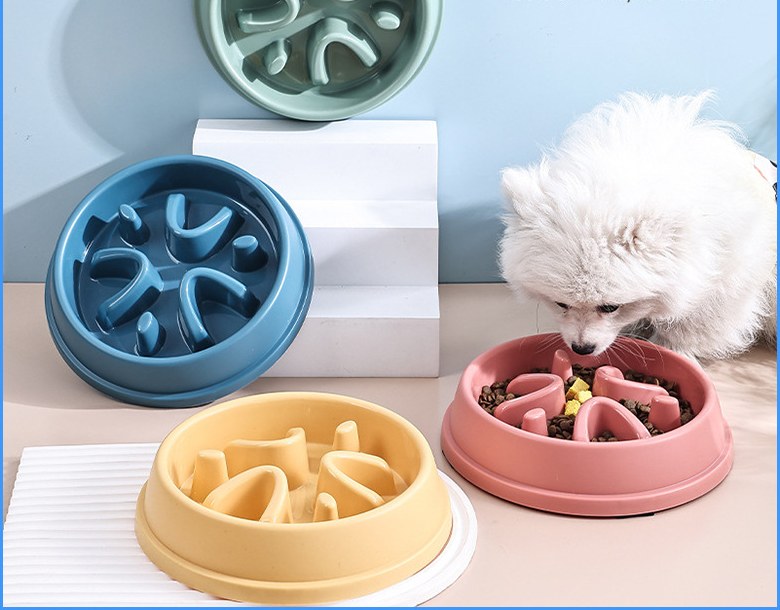
The best slow feeder bowl for a German Shepherd is a large model: 9–10 inches (23–25 cm) in diameter, with a deep, complex maze. Pick a chew-resistant build and a base heavy or grippy enough to stay put — a bowl this size stretches a 45-second gobble into a 5–15 minute meal. That matters for a breed that is deep-chested, eats fast, and faces a higher-than-average risk of bloat (gastric dilatation-volvulus, or GDV).
Why German Shepherds especially need a slow feeder
A healthy adult German Shepherd weighs 50–90 lb (22–40 kg) and eats roughly 3–4 cups of kibble a day, usually split into two meals. That is a lot of food moving quickly through a deep chest cavity — the body type most associated with GDV. A widely cited Purdue University study of large and giant breeds linked faster eating to a higher risk of bloat. For that reason, most German Shepherd owners and breeders treat a slow feeder as a routine part of the feeding setup rather than an optional gadget.
Shepherds also tend to be enthusiastic, powerful eaters: they will shove, lift and sometimes chew a bowl that isn't up to the job. That combination — deep chest, fast eating, strong jaws — is exactly what your bowl choice should answer.
1. Size: go large, and check the real numbers
Sizing is where most people get it wrong. A "large" label on a product page means nothing — ask for the diameter and the capacity in cups or milliliters:
- Diameter: 9–10 inches (23–25 cm) minimum. Anything smaller and a Shepherd's long muzzle will simply push the food out of the maze.
- Capacity: 4–6 cups, so a full 2-cup meal fills the maze without heaping above the ridges.
- Maze depth: channels at least 1.5 inches deep. Shallow patterns designed for small dogs barely slow a German Shepherd down.
For more on sizing across breeds, see our guide on the best slow feeder bowls for large dogs.
2. Material: pick for a power chewer
German Shepherds can destroy a thin silicone bowl out of frustration, so the material choice matters more here than for most breeds:
- Heavy-duty PP (polypropylene) plastic: the safest default for strong chewers. Rigid, thick-walled, dishwasher-safe, and the cheapest option in bulk (factory prices typically $1–2 at minimum order quantity (MOQ)).
- Thick food-grade silicone: works if the bowl is reinforced — look for extra-thick walls and a reinforced base. Softer on teeth but easier to gnaw through than hard plastic.
- Stainless steel with a silicone slow-feeder insert: the premium option. Virtually indestructible outer bowl, replaceable maze insert, and the easiest to sanitize.
Whichever you choose, confirm it is food-grade and free of bisphenol A (BPA) — our piece on how to tell if a silicone dog bowl is food-grade explains what to ask suppliers for.
3. Maze difficulty: intermediate to advanced
German Shepherds are smart and persistent — a beginner-level bowl with wide, shallow channels will only buy you an extra minute. Look for swirl, flower or labyrinth patterns with narrow turns. If you're buying for retail, stock two difficulty levels: an intermediate design for most dogs and a deep-labyrinth model for the determined gobbliers.
4. Stability: the bowl has to stay on the floor
A 75-pound Shepherd can push a light bowl across the kitchen in seconds. The designs that actually stay put combine two or more of these:
- a weighted or wide base that resists tipping,
- a full rubber anti-slip ring (better than three tiny pads),
- a suction-cup base on smooth floors.
When comparing suppliers, ask for a short video of a large dog using the bowl on a hard floor — it tells you more about stability than any spec sheet.
Cleaning and durability
Deep mazes trap food, and a German Shepherd's bowl goes through a lot of washing. Prefer smooth, rounded maze walls over sharp crevices, and confirm the bowl is top-rack dishwasher-safe. Hard plastic and stainless steel survive daily dishwasher cycles far better than thin silicone, which can develop odors over time.
Sourcing for retailers: the numbers
If you're stocking slow feeders for a pet store, German Shepherd–sized bowls are a strong niche: large-breed owners are motivated buyers, and the bowl is the gateway to the matching silicone lick mat bundle.
Factory prices from China run roughly $1–2 per unit for heavy-duty PP designs and $2–3.50 for thick silicone or steel models at typical MOQs of 100–500 pieces per color. Custom colors and logo printing are widely available at those quantities. At NIOCS, we compare vetted factories for retailers — contact us with your target quantity and we'll reply with a quote in 24 hours.
Quick answers
What size slow feeder bowl does a German Shepherd need?
Look for a bowl at least 9–10 inches (23–25 cm) in diameter with a 4–6 cup capacity. Smaller bowls let a Shepherd's long muzzle push food straight out of the maze.
Will a slow feeder bowl stop my German Shepherd from chewing the bowl?
Not by itself — but heavy-duty PP plastic or stainless steel models resist chewing far better than thin silicone. Supervise the first few meals and remove the bowl if your dog starts gnawing it.
Should German Shepherds eat from elevated bowls?
Usually no. Research has linked raised feeding to increased bloat (GDV) risk in deep-chested breeds, and slow feeders work best — and most safely — at floor level unless your vet advises otherwise.
Stock Shepherd-sized slow feeders at factory prices
Send us the design and quantity you need — we compare vetted factories and reply with a quote in 24 hours.
💬 Get a Wholesale Quote