How to Slow Down a Dog That Eats Too Fast
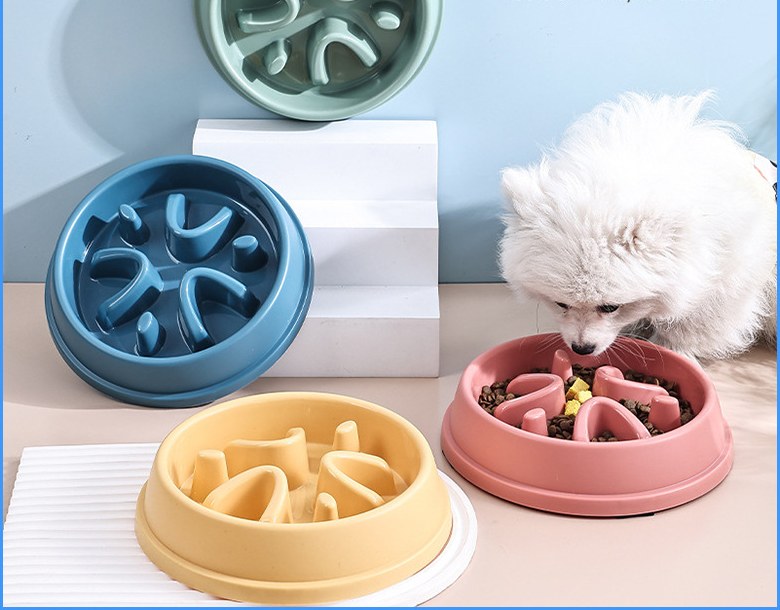
The fastest fix for a dog that inhales food is a slow feeder bowl with maze ridges that force the dog to eat around obstacles — it typically stretches a sub-60-second gobble into a calm 5–10 minute meal. Combine it with smaller, more frequent portions and a few training tweaks, and most dogs slow down noticeably within a week.
A healthy dog should take about 5–15 minutes to finish a meal. Dogs that regularly finish in under a minute swallow large amounts of air along with their food, which increases the risk of gastric dilatation-volvulus (bloat) — a life-threatening emergency in deep-chested breeds — along with regurgitation, gas and poor nutrient absorption. Here are seven practical ways to help your dog eat slower.
1. Switch to a slow feeder bowl
This is the single most effective change. Slow feeder bowls use raised ridges, swirls or maze channels to make food harder to grab in big mouthfuls. In our testing with supplier demo units, a bowl of kibble that a Labrador inhaled in about 40 seconds took 6–8 minutes in an intermediate maze bowl.
Match the maze difficulty to your dog: beginner-level wide channels for puppies, seniors and flat-faced breeds; deeper labyrinths for clever, food-obsessed adults. If you're buying to stock a store, check out our guide on how to choose the right slow feeder bowl — it covers material, sizing and safety in detail.
2. Spread wet food on a lick mat
For wet food, toppers or yogurt, a silicone lick mat is even slower than a bowl: the textured surface forces small, repetitive licks, and a single spoonful of peanut butter can occupy a dog for 10–15 minutes. Licking also releases calming endorphins, so it doubles as anxiety relief. See silicone lick mat benefits for dogs for setup ideas and safe topping recipes.
3. Split the meal into 2–3 smaller portions
Most adult dogs do well on two meals a day; fast eaters benefit from three. Splitting the daily ration means less food per sitting, less air swallowed per sitting, and a steadier blood-sugar curve. Measure with a scale or measuring cup — don't eyeball it. For puppies, slow feeder bowls work well alongside 3–4 small daily meals while eating habits are still forming.
4. Try scatter feeding or a snuffle mat
Skip the bowl entirely: scatter kibble across the lawn or a clean floor so the dog has to search for each piece. A snuffle mat — a fabric mat with fleece strips that hide kibble — works the same way indoors and turns mealtime into 10+ minutes of nose work. This is the cheapest method on this list and requires zero new equipment.
5. DIY option: the muffin-tin trick
No feeder on hand? Portion the kibble into a muffin tin and place a tennis ball or small toy in each cup. The dog has to nose around the obstacles to reach the food — the same principle as a commercial maze bowl, and a good way to test whether your dog responds to this approach before buying.
6. Hand feeding and calm-mealtime training
Feeding part of the meal by hand, one small handful at a time, teaches the dog that food comes slowly and there's no need to compete for it. Pair this with a "sit and wait" routine: ask for a calm sit before the bowl goes down, and only release with an "okay." Many dogs that were rehomed or competed with siblings for food gulp from anxiety — a predictable, unhurried routine removes the pressure.
7. Rule out medical causes
If a dog suddenly starts eating much faster than usual, check with a vet before buying equipment. Parasites, diabetes, thyroid issues and nutrient deficiencies can all drive ravenous eating. A sudden behavior change is a medical clue, not just a bad habit.
Quick answers
How long should it take a dog to eat a meal?
Aim for 5–15 minutes. Under a minute is too fast and raises the risk of bloat, vomiting and gas. A slow feeder bowl alone usually gets most dogs into the target range.
Will a slow feeder frustrate my dog?
Mild frustration at first is normal — it fades within a few meals. Start with an easy maze and make the first sessions positive. If the dog gives up entirely, the maze is too hard; switch to a beginner design.
Can I use a slow feeder for every meal?
Yes — they're designed for daily use. Just keep the bowl clean: maze crevices trap food, so rinse after each meal and run it through the dishwasher weekly. Food-grade silicone and PP plastic designs are dishwasher-safe.
Sell the solution to fast eaters
Stock maze slow feeders and lick mats at factory-direct prices — custom colors and logos available at low MOQs.
💬 Get a Wholesale Quote