Lick Mat vs Slow Feeder Bowl for Cats
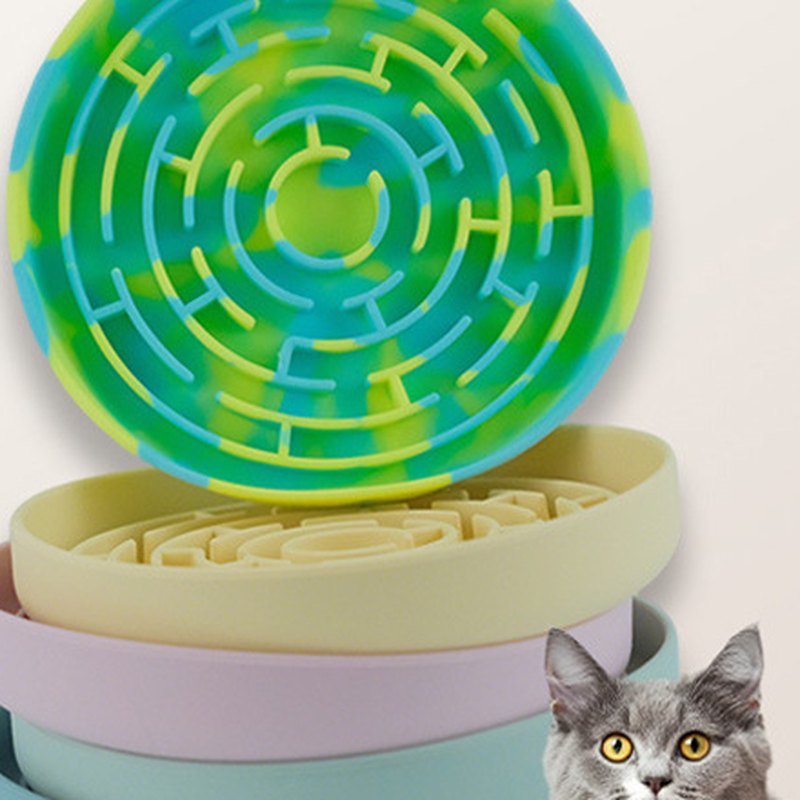
TL;DR: For most cats, the slow feeder bowl is the better everyday choice, and the lick mat is the better treat and calming tool. A slow feeder stretches a full meal from a 60-second gulp to a 5–10 minute meal, while a lick mat is made for spreadable foods — wet food, pâté, purées — and can keep a cat licking for 10–15 minutes. Many owners use both: the bowl for meals, the mat for enrichment and stress relief.
What each one actually does
A slow feeder bowl is a shallow bowl with ridges or a maze molded into the base. Your cat works its tongue around the obstacles to reach the food, which slows eating and cuts swallowed air. It handles kibble and wet food, and it serves full meals.
A lick mat is a flat silicone sheet covered in small nubs, ridges or textures. You smear wet food, yogurt or a treat across it, and the cat licks it clean.
The repetitive licking motion is calming — feline behavior research links licking to endorphin release — so lick mats are widely used during grooming, vet visits and crate training. But a mat cannot serve dry kibble: it supplements meals, it does not replace a bowl.
The American Association of Feline Practitioners (AAFP) agrees: its feeding guidance says programs should "incorporate the needs of all cats for play, predation, and a location to eat and drink where they feel safe" — consensus chair Tammy Sadek, DVM. See the AAFP and ISFM Feline Environmental Needs Guidelines.
| Lick mat | Slow feeder bowl | |
|---|---|---|
| Best for | Treats, calming, grooming | Full daily meals |
| Slowing power | 10–15 min for 20–30 g | 5–8 min for a 40–60 g meal |
| Food types | Wet food, pâté, purées | Kibble and wet food |
| Wholesale cost | $0.80–$2.00 (MOQ 500–1000) | $2.00–$4.00 (MOQ 500–1000) |
Slowing power: the bowl wins for meals
For a cat that inhales food and vomits undigested kibble, the slow feeder bowl is the direct fix. A cat that finished a 40 g meal in under a minute took 5–8 minutes from a shallow maze bowl — roughly a 5× slowdown. The same cat needed 10–15 minutes to lick a 20 g smear of wet food off a mat.
The mat looks slower, but it only handles part of a meal: about 20–30 g of spreadable food, against a full 40–60 g portion in a slow feeder bowl. To slow the whole meal, the bowl is the tool. Our guide on slowing down a fast-eating cat covers the full routine, including smaller, more frequent meals.
Whisker comfort: both can work — if they are shallow
Cats' whiskers are extremely sensitive, and deep, narrow bowls can cause whisker fatigue. Choose a slow feeder no deeper than 3–4 cm with a wide, open maze, and a lick mat that is completely flat. Avoid deep dog-style feeders with tall maze walls.
See our guide on slow feeder bowls for cats and whisker fatigue for more.
Cleaning and hygiene
Cleaning is where the lick mat and the slow feeder bowl diverge most. A slow feeder with smooth, rounded maze walls rinses clean in seconds and is dishwasher-safe on the top rack. A lick mat's tiny textures trap food residue — it needs a brush or a dishwasher cycle after every use, and an unwashed mat can grow mold within 24–48 hours in a warm kitchen.
Food-grade silicone is the right material for both: it withstands dishwasher heat, does not harbor odors, and reputable factories can supply raw-silicone test reports under the U.S. Food and Drug Administration (FDA) standard 21 CFR (Code of Federal Regulations) 177.2600 or LFGB (Germany's food-contact safety standard) — see this FDA vs LFGB comparison for silicone. If you buy for a store, ask for the report first: we ask for raw-material-grade reports and disclose exactly that, never a finished-product claim we do not hold.
Cost and sourcing: lick mats are cheaper to stock
For pet stores, the economics differ. From our 2026 factory quotes, a food-grade silicone lick mat costs roughly $0.80–$2.00 per unit at a 500–1000 piece minimum order quantity (MOQ); a cat-sized silicone slow feeder bowl runs $2.00–$4.00 at the same quantities. Lick mats ship flat and light, so freight per unit is lower; bowls are bulkier but retail higher, typically $8–$15 versus $5–$9 for a mat.
Production takes 7–15 days for both, or 30–35 days with custom colors or logo printing. The two share factories and a silicone supply chain, so ordering them together keeps your landed cost down — see our pet supply range.
Which one should you buy?
- Cat eats too fast and vomits: slow feeder bowl first. It slows the whole meal.
- Anxious cat, grooming or vet visits: lick mat — licking calms the cat for 10–15 minutes.
- Overweight cat: slow feeder bowl with measured portions — it makes a smaller meal feel longer.
- Senior cat or kitten: a shallow slow feeder, plus a lick mat for treats — see our guide on whether lick mats work for cats first.
- Pet store stocking both: bundle them — a bowl + mat set retails well and ships from one factory.
Our pick for 2026
The bottom line: buy the bowl first, add the mat second. A shallow food-grade silicone slow feeder bowl handles daily meals and solves the most common problem, fast eating, on its own. Add a silicone lick mat second: under $2 at wholesale, it calms cats during grooming and travel and turns one purchase into a bundle. For help choosing sizes or a factory quote, contact us with your target quantity.
Quick answers
Can a cat use a lick mat every day?
Yes, for treats — a 10–15 minute licking session once a day is fine. A lick mat should not replace meals, since it only holds 20–30 g of spreadable food and cannot serve kibble.
Which is easier to clean, a lick mat or a slow feeder bowl?
The slow feeder bowl: smooth maze walls rinse clean and go in the dishwasher. A lick mat needs brushing or a dishwasher cycle after every use, or food residue can mold within 24–48 hours.
Are lick mats and slow feeder bowls safe for cats?
Yes, when made from food-grade silicone and kept shallow (under 3–4 cm deep) to protect whiskers. Ask the seller for an FDA or LFGB test report for the silicone, and supervise the first few uses with aggressive chewers.
Stock lick mats and slow feeders at factory prices
Send us the design and quantity you need — we compare vetted factories and reply with a quote in 24 hours.
💬 Get a Wholesale Quote