Slow Feeding Benefits for Dog Digestion
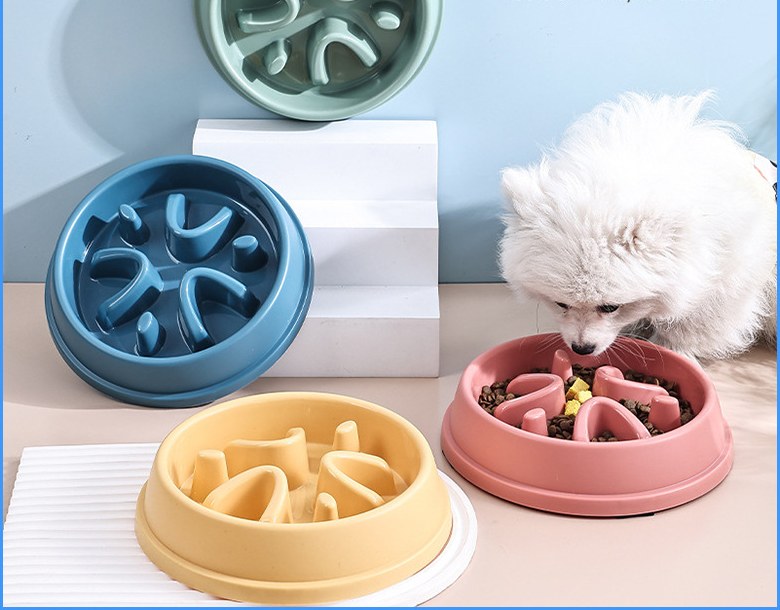
A slow feeding setup improves dog digestion because it stretches a 30–90 second gobble into a calm 5–10 minute meal. Slower eating cuts down on swallowed air — the main driver of bloating and post-meal vomiting — gives digestive enzymes more time to act on smaller mouthfuls, and lets fullness signals catch up so dogs feel satisfied on the same portion. For dogs that inhale their food, a slow feeder bowl is the simplest digestive aid you can buy: no supplements, no prescription diet.
1. What fast eating does to a dog's stomach
When a dog vacuums up two cups of kibble in under two minutes, three things happen at once. The dog gulps large volumes of air with every mouthful. The kibble arrives barely chewed, so it hits the stomach in big, hard chunks. The stomach receives its full load at once — causing belching, regurgitation, noisy digestion, and gas.
2. Bloat risk: the serious reason to slow down
Bloat — gastric dilatation-volvulus (GDV) — is one of the most dangerous emergencies in dogs, and rapid eating is consistently listed among its risk factors. Research from Purdue University's veterinary school found that dogs fed once daily and dogs that ate rapidly faced a higher risk of bloat than dogs fed smaller, slower meals. Large, deep-chested breeds (Great Danes, German Shepherds, Labradors) are especially vulnerable.
A slow feeder doesn't eliminate bloat risk, but it removes one controllable trigger. Emergency GDV surgery can cost $2,000–$5,000; a quality slow feeder bowl costs $1–4 at factory prices. For high-risk breeds, that math is easy.
3. Better nutrient absorption from smaller mouthfuls
Digestion starts in the mouth: saliva contains enzymes that begin breaking down starches, and chewing increases the food's surface area. A speed-eater skips both steps. Studies on meal pacing show that slower eating improves nutrient extraction from the same amount of food, because each mouthful is smaller, wetter, and better prepared for the gut.
In practice, this helps dogs that are thin despite eating plenty and dogs with loose stools on rich food: the stomach receives food in waves it can process, not one overwhelming surge.
4. Fewer post-meal vomiting episodes
The classic speed-eater episode — whole kibble returned minutes after the meal — is usually regurgitation from an overfilled stomach, not a disease. Maze bowls, lick mats, and puzzle feeders typically stretch those meals from under 2 minutes to 8–15 minutes, and most owners see the post-meal vomiting disappear within a week.
5. Calmer fullness signals and easier weight control
Satiety hormones like cholecystokinin take 10–20 minutes to tell the brain the stomach is full. A dog that finishes in 60 seconds never gets the signal in time and begs for seconds — which owners often mistake for a dog that needs more food. Slow feeding closes that gap: the meal lasts long enough for the "I'm full" signal to arrive, so the same measured portion actually satisfies the dog.
6. How slow is slow enough?
Aim for at least 5 minutes for a full meal, with 8–10 minutes ideal for fast eaters. How the three common feeding methods compare:
| Feeding method | Typical meal time | Difficulty level |
|---|---|---|
| Regular flat bowl | Under 2 minutes | None |
| Slow feeder bowl (maze) | 5–15 minutes | Low–high |
| Lick mat | 10–20 minutes | Low |
Time one meal each way — most owners see a 4–8× increase. Tips to get there:
- Match maze difficulty to the dog: too-easy mazes barely slow a clever dog; too-hard ones cause frustration.
- Spread wet food thinly on a lick mat — licking is naturally slow, and a smear of peanut butter or pumpkin can stretch a snack to 15+ minutes.
Choosing a bowl that actually helps digestion
For digestive health, pick deep, narrow channels that force the smallest bites, and smooth, rounded ridges — sharp crevices trap food and breed bacteria. The two safest materials are food-grade silicone and polypropylene (PP) plastic that is free of bisphenol A (BPA); both are dishwasher-safe, which keeps the bowl itself hygienic meal after meal.
Ready to pick one? See our slow feeder range — we supply food-grade silicone and plastic bowls in S/M/L at factory prices, with FDA (U.S. Food and Drug Administration) and LFGB (German food-contact safety) test reports on request. Not sure which design fits your dog or your customers? Read how to slow down a dog that eats too fast or slow feeder vs. puzzle toy, then message us for a quote.
Slow feeding and digestion: quick answers
Does slow feeding help dogs with sensitive stomachs?
It helps the most common kind: stomach upset caused by eating too fast. Smaller mouthfuls, less swallowed air and better chewing reduce gas, regurgitation and vomiting. For diagnosed conditions (IBD, pancreatitis, allergies), follow your vet's diet plan — the slow feeder is a complement, not a treatment.
How long should a dog take to eat a meal?
At least 5 minutes for a full meal, ideally 8–10. Finishing in under 2 minutes from a regular bowl means your dog needs a slow feeder.
Can slow feeders help overweight dogs?
Yes, indirectly. Slower eating lets satiety signals (which take 10–20 minutes) catch up with the meal, so the dog feels full on the same portion. Pair it with measured portions.
Stock slow feeders at factory prices
Send us the design and quantity you need — we compare vetted factories and reply with a quote in 24 hours.
💬 Get a Wholesale Quote