What Size Slow Feeder Bowl Does a Labrador Need?
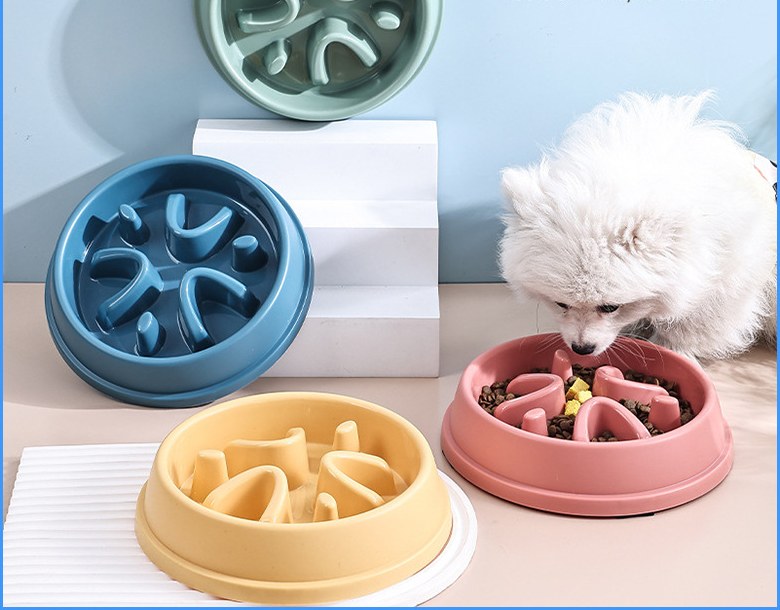
An adult Labrador (55–80 lbs) typically eats 2–4 cups of kibble per meal, so choose a slow feeder bowl with a 4–6 cup capacity (about 1.5–2 liters) — roughly 23–25 cm (9–10 in) in diameter and 7–10 cm (3–4 in) deep. The kibble should fill the maze without heaping above the ridges, and a well-sized bowl should stretch your Lab's meal from a 60-second gobble to a calm 5–10 minutes.
Why sizing matters so much for Labradors
Labs are legendary food enthusiasts. A bowl that is too small means kibble spills over the edges; one that is too big lets your dog eat around the maze, defeating its purpose.
There is a health angle too. Deep-chested breeds that eat too fast swallow excess air, raising the risk of gastric dilatation-volvulus (bloat) — a condition Labs are predisposed to. A correctly sized slow feeder is one of the simplest, cheapest preventive measures you can buy.
Step 1: match capacity to each meal, not the day's total
Manufacturers label bowls S/M/L, but those letters mean nothing across brands. Ignore them and check the actual capacity:
- Puppy (2–6 months, 3 meals/day): ~1–2 cups per meal → 2–3 cup bowl (0.5–0.75 L)
- Junior (6–12 months, 2–3 meals/day): ~1.5–2.5 cups per meal → 3–4 cup bowl (0.75–1 L)
- Adult (1–7 years, 2 meals/day): ~2–4 cups per meal → 4–6 cup bowl (1.5–2 L)
- Senior (7+ years, 2 smaller meals): ~1.5–2.5 cups per meal → 3–4 cup bowl (0.75–1 L), plus a shallower maze
If your Lab's meal fills the maze and sits below the top of the ridges, the size is right. If kibble mounds above the maze, go one size up — an overfilled slow feeder slows nothing down.
Step 2: check diameter and depth
For an adult Lab, look for a bowl about 23–25 cm (9–10 in) across with a maze 3–5 cm deep. A good rule of thumb: the bowl's diameter should be roughly 1.5× your dog's muzzle width. A Lab's muzzle is about 12–15 cm wide, which lands you squarely in the 23–25 cm range.
Depth matters as much as width. Shallow decorative ridges (under 2 cm) barely slow down a determined Lab. Aim for ridges at least 3 cm tall with rounded, smooth tops — tall enough to force licking and nudging, smooth enough to be gentle on teeth and easy to clean.
Step 3: pick a material that survives a Lab
Labradors are powerful chewers with enthusiastic eating styles, so material choice matters:
- Food-grade silicone: flexible, quiet, dishwasher-safe and gentle on noses. Our top pick for most Labs. Choose a design with a suction-cup or weighted base so the bowl doesn't skate across the floor.
- PP plastic: sturdy and the cheapest option in bulk — ideal if you are buying for a store or a multi-dog household. Confirm it is BPA-free and food-grade.
- Stainless steel with a silicone maze insert: the chew-proof option for Labs that gnaw their bowls. Heavier and pricier, but nearly indestructible.
Whatever you choose, avoid bowls with painted decorations inside the food area and skip sharp-edged crevices that trap food and bacteria. Rounded maze walls wipe clean in seconds. See our full comparison in Plastic vs Silicone Slow Feeder Bowl.
Step 4: adjust for puppies and seniors
A Lab puppy shouldn't get an adult-size bowl. An oversized maze lets a puppy reach the bottom without working the pattern, and tall ridges can frustrate a young dog. Start with a 2–3 cup beginner bowl and upgrade around 8–10 months, or whenever meals start overflowing the maze.
For senior Labs (7+), do the opposite of what you'd expect: go shallower, not smaller. A 3–4 cup bowl with gentle, low ridges accommodates stiffer necks and worn teeth while still slowing the meal. Read more in Are Slow Feeder Bowls Good for Puppies?.
Quick sizing checklist
Before you buy or stock a bowl for Labs, run through these five checks:
- Capacity is 4–6 cups (1.5–2 L) for an adult Lab's single meal
- Diameter 23–25 cm, maze depth 3–5 cm
- Food-grade, BPA-free material (ask the factory for the test report)
- Suction-cup or weighted non-slip base — a 30 kg Lab can shove a light bowl across the room
- Smooth, rounded maze walls with no paint in the food area
Quick answers
Can a Labrador use a medium-size slow feeder bowl?
Only for puppies or small meals. A "medium" bowl is usually 3–4 cups — fine for a Lab puppy or a senior's reduced meal, but an adult Lab's 2–4 cup meal will heap above the ridges and lose the slowing effect.
How much does a Lab-sized slow feeder bowl cost wholesale?
Factory prices from China run under $1 for basic plastic designs and $2–4 for food-grade silicone in custom colors, depending on order quantity. See our wholesale buyer's guide for real MOQs and landed-cost math.
What if my Lab flips the bowl instead of eating from it?
Switch to a suction-cup base on smooth floors, or a weighted rubber-ringed bottom on tile. If the dog still wins, try a stainless steel bowl with a silicone maze insert — heavier and much harder to flip.
Need Lab-sized slow feeders in bulk?
Tell us the size, material and quantity — we compare vetted factories and reply with a quote in 24 hours.
💬 Get a Wholesale Quote