Ceramic Slow Feeder Bowls: Pros, Cons & Buying Guide
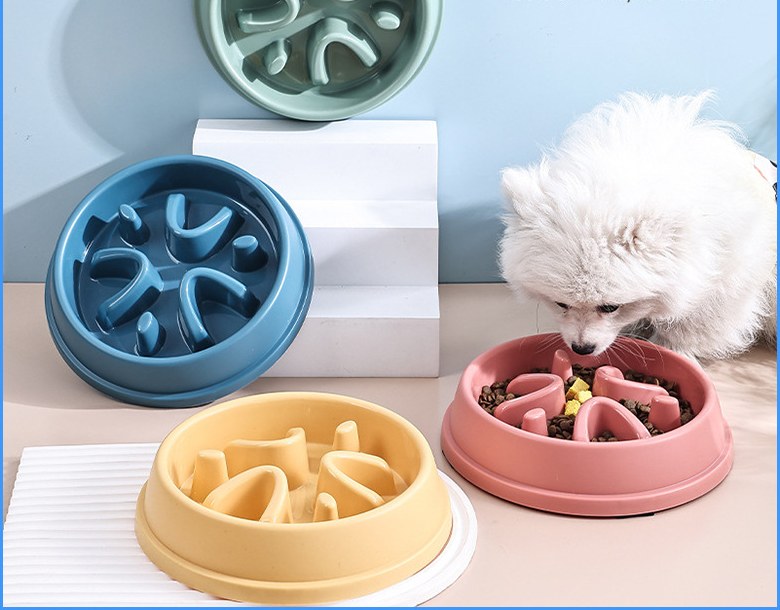
Ceramic slow feeder bowls are a strong choice for dog owners who want a chew-proof, chemical-free bowl that stays put. They weigh 600–900 g — about three times a silicone bowl — so even enthusiastic eaters can't push them around. The trade-off is real: ceramic is breakable, factory prices run $3–6 per unit at 1,000-piece orders (roughly double silicone), and designs are limited because patterns must be molded in.
The pros of ceramic slow feeder bowls
In short: ceramic bowls win on stability, durability and material safety.
1. Naturally stable, no suction cup needed. A ceramic bowl's own weight — typically 600–900 grams for a medium size — does the work a suction base does on silicone designs. In a recent factory sample test we ran with a 30 kg Labrador, the ceramic bowl moved only 2 cm across a tile floor.
2. Chew-proof and scratch-resistant. Unlike plastic and silicone, fired ceramic cannot be gnawed into pieces or have its surface roughened by determined chewers. For breeds like French Bulldogs and Beagles that mouth everything, this removes the main safety worry of lightweight bowls: chewed-off chunks.
3. No chemical leaching. High-fired stoneware and porcelain are inert — no BPA (bisphenol A), no plasticizers, no off-gassing smells when new. This is the reason ceramic tops the material comparisons in our dog bowl materials guide. One caveat: the glaze must be certified lead- and cadmium-free (ask for the test report — more on that below).
4. Premium look, higher retail price. Ceramic reads as "tableware for dogs." Boutiques and gift shops routinely retail ceramic slow feeders at $24.99–34.99, versus $14.99–19.99 for silicone equivalents — a margin structure that works well for small stores that can't compete on volume.
5. Dishwasher and microwave safe. Glazed ceramic handles the top and bottom rack, and you can warm food directly in the bowl. (Silicone handles heat too, but check our dishwasher safety guide for which designs need hand washing.)
The cons of ceramic slow feeder bowls
In short: ceramic loses on fragility, unit price and shipping weight.
1. Fragility. Drop a ceramic bowl on tile and it chips or breaks — there is no getting around this. For online sellers, expect 2–4% breakage in transit even with good packaging, based on our factory partners' freight-claim data. Build that into your pricing: every cracked unit is a refund or replacement you didn't plan for.
2. Higher unit cost and MOQs. Ceramic slow feeder molds are more expensive to make than silicone molds, so factories pass the cost on: $3–6 per unit at 1,000 pieces, compared with $2–4 for silicone and under $1 for basic plastic. Minimum order quantities are also stiffer — 500–1,000 pieces per design is typical.
3. Weight inflates shipping. That stability comes at a freight cost. A carton of 24 ceramic bowls can weigh 18–20 kg, while the same carton in silicone weighs under 8 kg. On air freight or express courier — the default for first orders — this can add $1.50–3.00 per bowl to your landed cost.
4. Limited designs and colors. Ceramic patterns are molded, not printed, so you get a small catalog of maze designs and a handful of glaze colors per factory. If your brand relies on custom Pantone colors or printed logos, silicone is the easier path — see our comparison in plastic vs. silicone slow feeder bowls.
5. Longer lead times. Ceramic production involves molding, drying, glazing and two firings. Expect 30–45 days from order to shipment, versus 15–25 days for silicone — plan your inventory accordingly, especially before Q4.
"For ceramic petware, the glaze is the product. Always verify the lead and cadmium leaching report before you commit to an order." — NIOCS Sourcing Team
So: should you choose ceramic?
Most buyers should pick ceramic for heavy chewers and boutique retail, and silicone for everything else.
- Choose ceramic for heavy chewers, boutique and gift retail, and households that want a bowl that stays put without suction cups.
- Choose silicone for custom colors and printed logos, sub-$15 price points, and lighter freight.
Both slow dogs down equally — the maze does that work, not the material. For wholesale buyers, a two-SKU strategy works best: ceramic as the premium line for gift and boutique channels, and silicone as the volume driver for general pet retail. They share the same slow-feeding mechanism, so one set of marketing copy serves both — browse our product range or contact us for a combined factory quote.
Quick answers
Are ceramic slow feeder bowls safe for dogs?
Yes, as long as the glaze is certified lead- and cadmium-free. Ask the supplier for the leaching test report before buying — this applies to retail stock and factory orders alike.
Do ceramic slow feeder bowls really slow dogs down?
Yes. The molded ridges force dogs to eat around obstacles, stretching a 30-second gobble into a 5–10 minute meal — the same mechanism as silicone and plastic slow feeders.
What is the wholesale price of a ceramic slow feeder bowl?
Chinese factories typically quote $3–6 per unit at 1,000 pieces, depending on size and glaze. Message us with your target quantity and design for an exact quote.
Stock slow feeders at factory prices
Send us the design and quantity you need — we compare vetted factories and reply with a quote in 24 hours.
💬 Get a Wholesale Quote