Do Cat Slow Feeder Bowls Work?
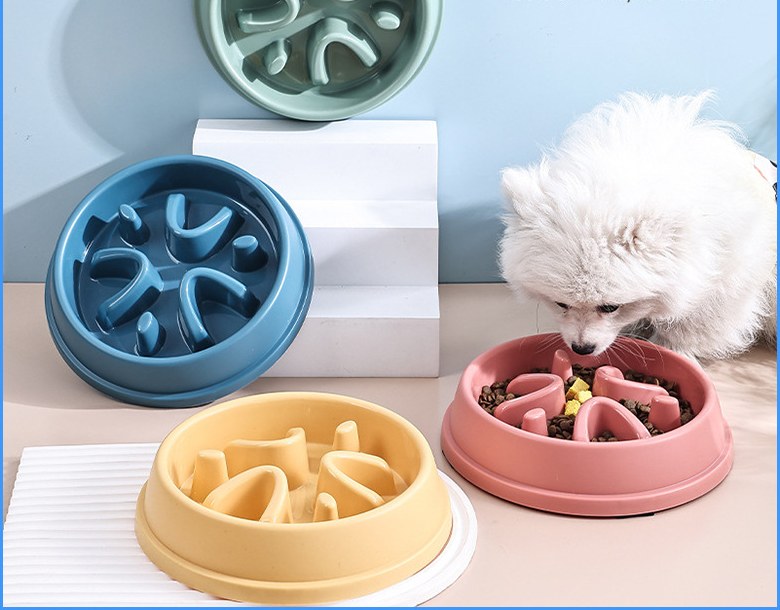
Yes, slow feeder bowls work for cats — when they're designed for cats. A shallow, whisker-friendly maze stretches a 60-second gobble into a 5–8 minute meal, and most owners report noticeably less scarf-and-barf vomiting within the first week. The catch: bowls made for dogs are usually too deep for a cat's muzzle — which is why so many cat slow feeders fail.
Why fast eating is a cat problem too
Cats that compete at the food bowl — in multi-cat homes or shelters — often swallow 60–80 grams of kibble in under a minute, barely chewing. The most common result is regurgitation minutes later: the classic "scarf and barf." Dr. Bruce Kornreich of the Cornell Feline Health Center notes that fast-eating cats are more likely to vomit soon after eating, and may face a higher obesity risk as well (source).
The fix is mechanical, not medical: force the cat to take smaller bites. That's exactly what a maze feeder does — and it works the same way for cats as it does for dogs (see how slow feeding helps digestion), provided the maze fits a cat's anatomy.
What "working" actually looks like
Three numbers tell you if a slow feeder is working:
- Meal duration: 5–8 minutes for a 60–80 g portion. Under 2 minutes is too easy; over 12 minutes and most cats give up.
- Regurgitation frequency: the biggest win. Fast eaters that vomited 2–3 times a week typically drop to near zero once they stop inhaling food.
- Acceptance: about 8 in 10 cats switch within 3–5 days with a shallow bowl and a gradual transition.
That's not lab data — it's what the maze geometry enforces: narrow channels force licks and small bites instead of open-mouth scoops. Veterinary clinics confirm that vomiting undigested food shortly after eating is a classic sign of eating too quickly, and that slow-feeder bowls can help prevent it (source).
Five features that make a slow feeder work for cats
1. Shallow and wide. The #1 reason cat slow feeders fail is depth. Look for a bowl 12–15 cm across with ridges only 1–2 cm high — deep dog-style mazes (3–5 cm) trap wet food a cat's flat tongue can't reach.
2. Whisker-friendly shape. Cats dislike their whiskers brushing the bowl walls — "whisker fatigue." A wide, low-sided bowl lets the cat eat without pressing its face into the rim.
3. Soft, food-grade silicone. Silicone mazes are quieter, gentler on sensitive noses, and dishwasher-safe, with rounded ridges that wipe clean. Always confirm the bowl is food-grade and free of BPA (bisphenol A) with a verifiable test report; our BPA-free buying guide explains what to look for.
4. A non-slip or suction base. Cats bat at the bowl with a paw. A suction-cup or weighted rubber base keeps the maze on the floor instead of sliding across the kitchen — especially on tile.
5. Size matched to the portion. A maze holding 100 g covers the typical adult cat meal (50–80 g) — excess empty space just frustrates first-time users.
Designs to avoid
Skip deep, narrow dog mazes — wet food cakes at the bottom where a cat's tongue can't reach. Skip painted decorations inside the food area, and skip detachable maze pieces a cat could chew off and swallow. One molded piece is safest — we favor one-piece silicone feeders for cats.
How to introduce a slow feeder to your cat
- Days 1–2: put the new bowl next to the old one with a few treats in the maze, so the cat associates it with something good.
- Days 3–4: serve half the meal in the old bowl and half in the slow feeder.
- Day 5+: full switch for most cats.
If a cat refuses beyond a week, try a lick-mat surface instead — spreading wet food on a flat mat (see our lick mat guide) slows eating with zero frustration. Smaller, more frequent meals help too — vets recommend them for fast eaters alongside any slow-feeding tool (source).
What cat slow feeders cost
Factory prices from China: basic plastic cat slow feeders run about $0.50–$1.50 per piece at 500+ quantities. Food-grade silicone versions run $1.50–$3.00, with custom colors and logo printing at low MOQs (typically 300–500 pieces). Retail markups run 4–5×, so pet stores increasingly add cat-sized mazes beside dog feeders — contact our sourcing team for exact pricing; we quote within 24 hours.
Quick answers
Will my cat refuse to eat from a slow feeder?
Most don't — about 8 in 10 cats accept a shallow maze within 3–5 days. Refusals usually trace back to dog-depth bowls; use a shallow cat design and transition gradually.
Are slow feeders okay for kittens and senior cats?
Yes. Choose the softest silicone and the shallowest maze for kittens (from 8 weeks) and seniors with dental issues. Supervise the first few meals, and skip designs with detachable parts for heavy chewers.
Should cat bowls have FDA or LFGB test reports?
Yes. Anything a cat licks daily should be food-grade with a verifiable test report — FDA (U.S. Food and Drug Administration) 21 CFR (Code of Federal Regulations) 177.2600 for silicone, or LFGB (the German food-contact materials standard) for the European market. No report, no partnership is our rule when sourcing from factories.
Stock cat slow feeders at factory prices
Send us the design and quantity you need — we compare vetted factories and reply with a quote in 24 hours.
💬 Get a Wholesale Quote